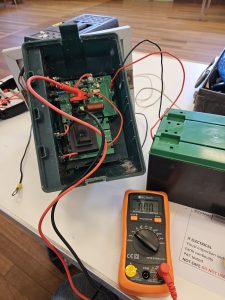
 I had to admit defeat with this electric-fence unit, which was showing no signs of life in spite of having had a new battery fitted. Having tested the battery and the solar panel which is meant to charge it, I was forced to conclude that the electronic control board was faulty – way beyond my capabilities!
Incidentally, as a battery-powered unit this item cannot be given a PAT test. PAT tests only apply to mains-powered devices. However, when working it would generate 10,000 volts, so there was a danger of it coming to life while I was tinkering and delivering a nasty shock. I therefore took a couple of simple precautions:
- Removing the trailing leads from the output terminals; and
- Disconnecting the primary supply to the output transformer (on the bottom circuit board in the photo)
It is a general rule that repairers must assess such risks before attempting repairs.
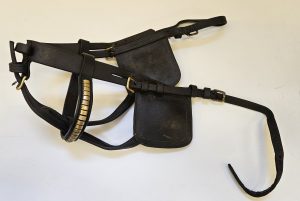 Our sewing team are always up to a challenge, and volunteer Anne came up with the goods on 20 June when presented with this horse’s bridle with a dodgy strap, brought in by a travelling caravan dweller. She concluded that although badly cracked, the leather was basically sound and just needed restitching, which she was able to do on the day.
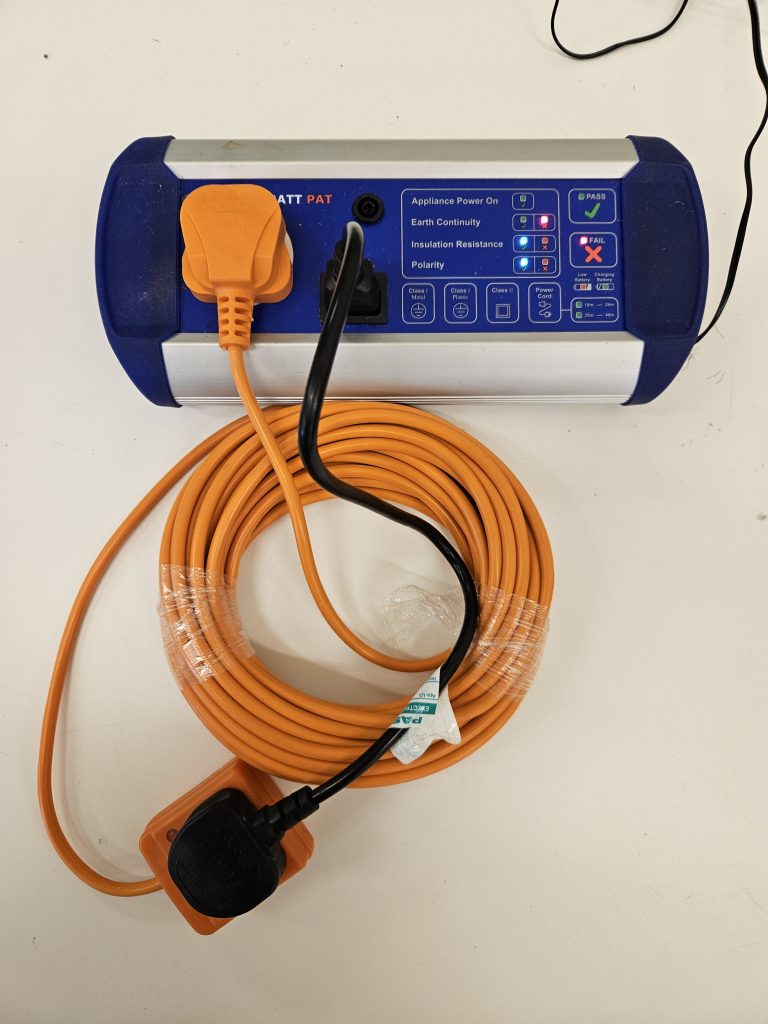
One of our repairers asked me to test an extension lead he had acquired at a car boot sale. Our portable appliance tester can test extension leads: in the photo you can see the lead (orange) is plugged into the tester and then connected back at the other end (via the short black lead). The point of this is to check whether the earth wire is connected at both ends; and in this case, we see that the earth continuity test has failed.
 How could this be?
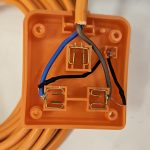
The simple answer is that there was no earth lead in the cable, as this photo inside the socket shows. The manufacturers have used two-core flex, and also there’s no clamp on the cable, meaning it could easily be pulled out in use.
Not good. Lesson: get the car registration number when you buy anything potentially risky.
|
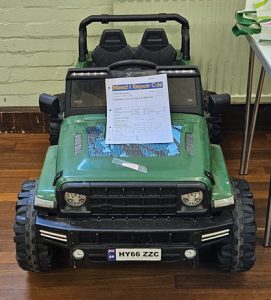
This child’s electric jeep had come in last month when our normal session had been cancelled, but I took it on as a job to do at home.
The problem was simply that it would not go. |
 |
| Checking the battery voltage showed it to be dead, but with a temporary supply there were signs of life with the lights and sound effects so it seemed possible that the electronic controller (top of photo) was still working. The customer agreed to risk investing in a new battery which would either cure the problem or enable me to diagnose whatever else might be amiss. |
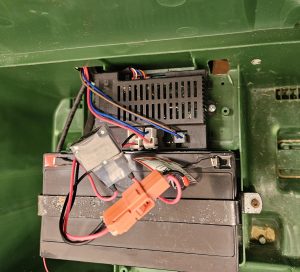 |
| With a new battery, fully charged, there was still no response to the accelerator but crucially everything worked when the jeep was driven by means of its remote control.
That meant that we could eliminate the onboard electronics and the motors: the next most likely culprit was the accelerator.
From the way it clicked I could tell it was just an on-off switch. |
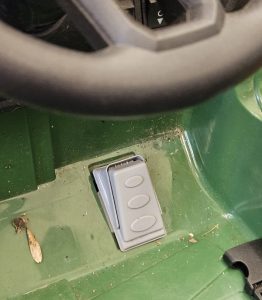 |
| Having figured out how to remove the pedal assembly I could get access to the switch connections. Notice how they have used a twin switch, meaning that there are spare normally-open connections on the right. |
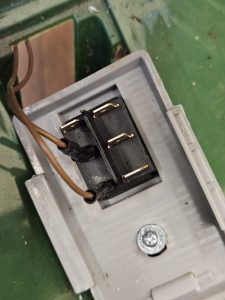 |
| Shorting across the connections on the switch brought the beast to life, proving that the switch contact was the culprit… |
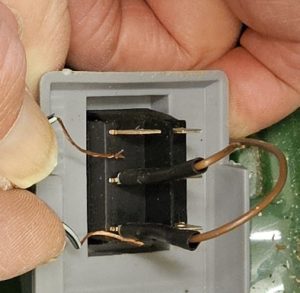 |
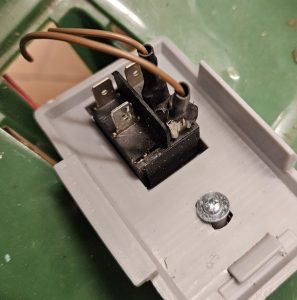
| …so I just had to move the wires over to the spare pair of on-off terminals.
Put everything else back as I found it and job done. |
 |
The key here was to start with methodical diagnosis. And although the owner had helpfully brought the instruction booklet (never throw those away!) on the first visit, I didn’t learn until later that there was a remote control. It was the fact that it worked under remote control which enabled me to pinpoint the fault.
Lesson: bring all its accessories and ancillaries with the item you want fixing.
|
Fixing your small personal and household items